

Choosing a fit-out contractor is one of the most consequential decisions in a construction programme. Drawings can be excellent and materials can be carefully selected, but the delivery team determines whether those intentions survive procurement, coordination, site conditions, and the pressure of the programme.
In Egypt, the decision often involves additional variables: imported-material lead times, live-mall or operating-hotel restrictions, coordination between several specialist trades, landlord approvals, and the practical realities of fast-track delivery. A polished presentation is not enough. Clients need evidence of disciplined systems, accountable leadership, and consistent site execution.
The following questions help owners, operators, developers, and consultants compare contractors on substance rather than price alone.
1. Have you delivered projects with similar operational constraints?
Relevant experience is more specific than sector experience. A contractor may have completed restaurants but never worked inside an operating resort. A retail contractor may understand finishes but not the permits, access windows, noise restrictions, and protection requirements of a live mall.
Ask for examples that match your project’s conditions: location, working hours, programme, technical complexity, and stakeholder environment. The strongest answer explains the constraints, the decisions taken, and how the team protected ongoing operations.
Review Silverline’s selected projects to see how hospitality, retail, and commercial requirements change from one environment to another.
2. Who will be accountable from appointment to handover?
Clarify the delivery structure before signing. Identify the project manager, site manager, technical coordinator, quantity surveyor, procurement lead, and safety responsibility. Ask which people are dedicated and which are shared across projects.
A clear organisation chart prevents a common problem: important decisions moving between sales, technical, procurement, and site teams without one person owning the outcome. The client should know exactly who receives an instruction, who assesses its impact, and who confirms closure.
3. How do you coordinate architecture, MEP, and specialist trades?
Many costly site problems begin at interfaces: a lighting channel conflicts with an air-conditioning route, a ceiling access panel interrupts a feature detail, or joinery is fabricated before final electrical positions are approved.
Ask how the contractor manages coordinated drawings, builder’s work requirements, reflected ceiling plans, equipment schedules, and technical submittals. Coordination should happen before installation, not through improvised adjustments on site. Silverline’s integrated services place design, engineering, fit-out, and project management within one coordinated workflow.
4. What is included—and excluded—in the commercial proposal?
The lowest total is rarely meaningful without a precise scope comparison. Request a structured bill of quantities that identifies specifications, quantities, rates, allowances, provisional sums, exclusions, and client-supplied items.
Discuss how design development, authority comments, price fluctuations, and material substitutions will be handled. A responsible contractor makes uncertainty visible. Hidden exclusions simply reappear later as variations, delay, or compromised quality.
5. How is the programme built and controlled?
A credible programme is more than a completion date. It should connect approvals, shop drawings, mock-ups, procurement, fabrication, site access, installation, testing, and handover documentation.
Ask which activities control the critical path, which materials require early release, and how progress will be reported. Weekly updates should show completed work, upcoming decisions, procurement status, constraints, and recovery actions—not only photographs and percentages.
Our step-by-step process shows how early briefing and engineering decisions support predictable execution.
6. How do you manage materials and substitutions?
Material control begins with approved samples and finishes with traceable delivery and protected installation. Ask about submittal registers, sample boards, mock-ups, supplier evaluation, storage, inspection, and batch consistency.
If an item becomes unavailable, substitution should follow a defined approval process. The alternative must be assessed for appearance, performance, warranty, maintenance, availability, and cost. A visually similar material is not necessarily technically equivalent.
7. What quality controls happen before the final inspection?
Quality cannot be inspected into a project during the final week. It must be planned through benchmarks, first-off inspections, checklists, hold points, testing, and progressive snagging.
Ask the contractor to describe controls for waterproofing, ceilings, stone, joinery, paint, MEP testing, and concealed work. Confirm who signs inspections and how non-conformities are recorded and closed. Look for a culture that treats correction as part of disciplined delivery rather than a dispute.
8. How do you protect safety and an operating environment?
Request the project-specific safety plan, risk assessments, method statements, induction process, emergency arrangements, and housekeeping standards. For occupied buildings, also ask about dust, noise, temporary barriers, delivery routes, public protection, and daily reinstatement.
Safety performance is inseparable from project management. An orderly, protected site is usually a sign that sequencing, supervision, and trade coordination are being controlled as well.
9. How will changes and decisions be documented?
Changes are normal; uncontrolled changes are expensive. Agree the process for requests for information, instructions, technical queries, variation quotations, programme impact, and approval before work proceeds.
Meeting minutes should identify owners and deadlines. Drawings should carry revision status. Commercial changes should be visible in a live register. This documentation protects all parties and enables decisions to be made with a clear understanding of time and cost.
10. What exactly is delivered at handover?
Handover is a managed phase, not the moment the site team leaves. Confirm the requirements for testing and commissioning, warranties, operation manuals, as-built drawings, training, authority approvals, spare materials, keys, and final snag closure.
Ask who remains responsible during the defects and aftercare period and how issues are logged and answered. A contractor’s commitment after practical completion is one of the clearest indicators of long-term accountability.
Compare value, not only price
The strongest appointment decision balances commercial clarity, technical competence, leadership, programme control, and evidence of finish quality. A detailed proposal from an accountable contractor may initially appear higher than an incomplete offer, but it gives the client a far more reliable picture of the final commitment.
Before awarding, compare bidders against the same scope and score the ten areas above. Visit a completed project where possible, speak with previous clients, and meet the actual delivery team—not only the tender team.
What to include in the tender information
Contractors can only price and plan what they understand. A useful tender package includes the approved or current design information, scope boundaries, specifications, schedules, site survey, access rules, target dates, authority responsibilities, client-supplied items, testing requirements, handover deliverables, and the commercial form of return. Where information is incomplete, identify assumptions that every bidder must use.
Ask bidders to separate exclusions, provisional allowances, alternatives, and clarifications from their base offer. This makes comparison more reliable and reduces the chance that a low headline price depends on omitted work. The tender period should also allow a site visit and a structured question process so answers are issued consistently to all parties.
A simple evaluation scorecard
Create a weighted scorecard before proposals arrive. Commercial value may carry a significant weighting, but it should sit alongside technical understanding, relevant experience, proposed team, methodology, programme, procurement approach, safety, quality control, and handover capability. Agree who will score each area and what evidence earns a strong result.
The scorecard is not a substitute for judgment. It makes that judgment visible. If one contractor is selected despite a lower technical score, the decision-makers can identify the exact trade-off and confirm how the associated risk will be managed. Clarification meetings should use the same questions for shortlisted bidders and record any offer revisions.
Warning signs during contractor selection
Be cautious when a proposal contains a single total without a traceable breakdown, relies heavily on undefined allowances, or promises an aggressive completion date without a procurement and approval plan. Other warning signs include unclear exclusions, no named site leadership, reluctance to discuss completed references, generic safety documents, and an inability to explain how drawings and changes will be controlled.
Responsiveness during tender is also informative. A contractor does not need to agree with every assumption, but should raise conflicts clearly, propose practical options, and document the basis of the offer. The goal is not to find a bidder who never identifies risk. It is to find a team that identifies risk early and manages it transparently.
Silverline combines engineering discipline, technical coordination, fit-out execution, and project management under one accountable structure. If you are planning a hospitality, retail, commercial, administrative, or residential project, start a project conversation with our team.
Related Articles
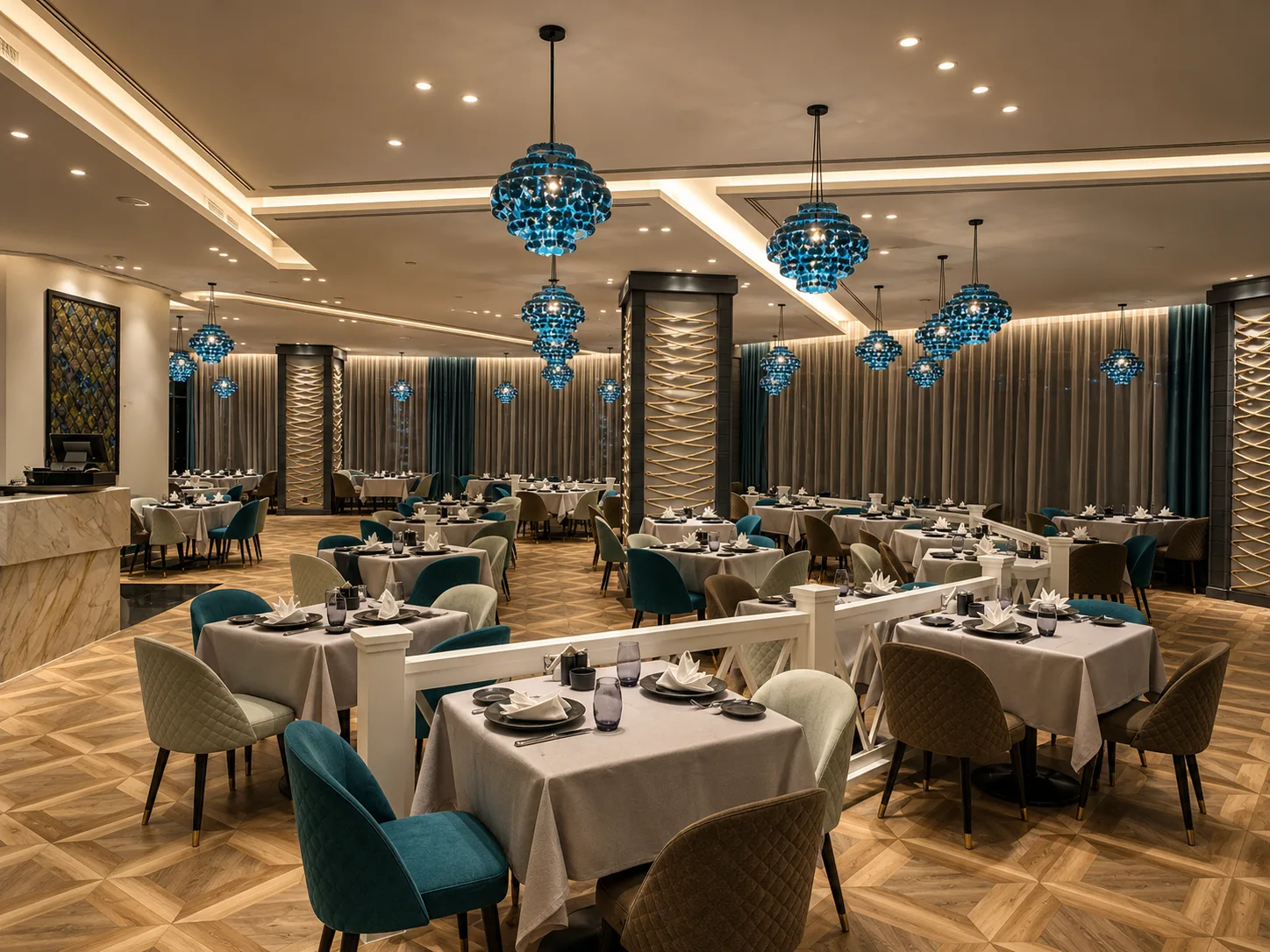
Hospitality Fit-Out in Egypt: Balancing Guest Experience, Operations, and Delivery
Hospitality interiors must feel effortless to guests while performing under constant operational pressure. Delivery depends on decisions made long before installation.
Read article →
From Brief to Handover: A Practical Guide to Integrated Construction Delivery
Predictable delivery is created before construction starts. An integrated process connects every decision from the first brief to final aftercare.
Read article →
